
united states navy diving manual
The U.S. Navy Diving Manual is a comprehensive resource, evolving from a 66-page guide in 1905 to a detailed 992-page document (Revision 7).
It serves as a crucial reference for both professional divers and those seeking a procedural understanding of diving operations, encompassing historical context and modern techniques.
Historical Overview of Navy Diving Manuals
The lineage of the U.S. Navy Diving Manual stretches back to the early 20th century, with the initial publication in 1905 being a concise 66-page document. This early version laid the groundwork for standardized diving procedures within the Navy.
A significant milestone arrived in 1943 with a dedicated manual focused on wartime diving needs, reflecting the increasing importance of underwater operations during World War II. Subsequent revisions, notably Revision 4, aimed to refine and expand upon existing knowledge. The evolution continued, culminating in Revision 7 (2016, updated April 2018), a substantial 992-page volume.
Each iteration reflects advancements in diving technology, physiology, and operational requirements, demonstrating the Navy’s commitment to safety and effectiveness.
Purpose and Scope of the Manual
The U.S. Navy Diving Manual serves as the definitive guide for all underwater operations conducted by Navy personnel. Its primary purpose is to establish standardized procedures, ensuring safety and mission success across a diverse range of diving activities.
The manual’s scope is remarkably broad, encompassing surface-supplied diving, SCUBA operations, and advanced techniques like closed-circuit and semi-closed-circuit diving. It details equipment specifications, operational guidelines, and crucial physiological considerations.
Furthermore, it provides essential medical information regarding dive-related injuries and diver evaluations, making it a vital resource for both divers and support staff.
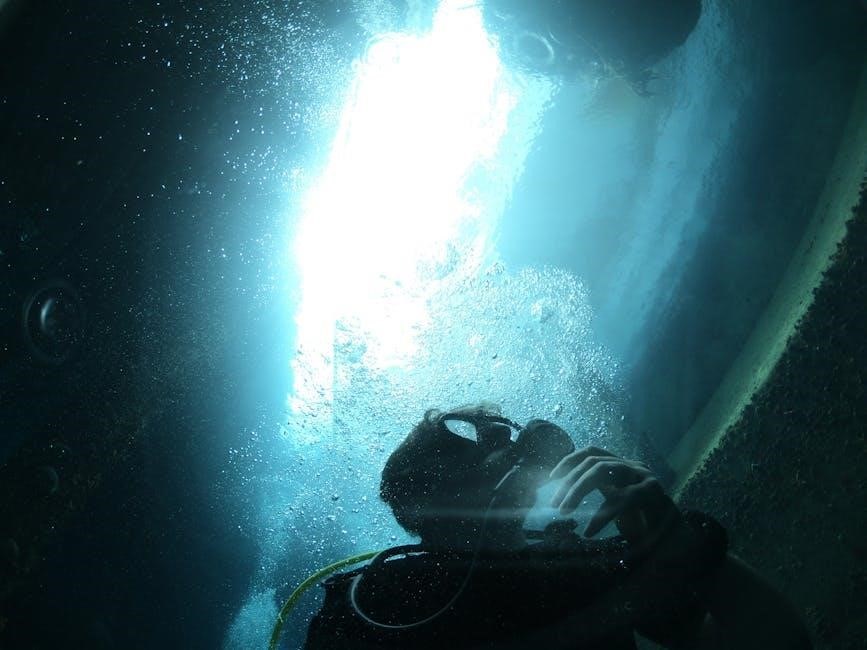
Evolution of the U.S. Navy Diving Manual
The Navy Diving Manual has undergone significant evolution, expanding from a concise 1905 edition to the comprehensive Revision 7, reflecting advancements in diving technology and safety.
Early Manuals (Pre-1940s)
Prior to the 1940s, U.S. Navy diving manuals were relatively succinct, focusing on the foundational principles of underwater work. The 1905 edition, a pioneering effort, contained approximately 66 pages, illustrating the nascent stage of formalized diving procedures within the Navy.
These early publications primarily addressed the development of diving itself and the initial training protocols for Navy divers. They detailed the limited equipment available at the time and the basic techniques employed for underwater tasks, such as salvage operations and hull inspections. The content reflected a period where diving was largely exploratory and heavily reliant on physical endurance and rudimentary technology.
These manuals laid the groundwork for future, more detailed revisions, establishing a crucial historical context for the evolution of Navy diving practices.
The 1943 Diving Manual
The 1943 Diving Manual represented a significant step forward in standardizing U.S. Navy diving procedures during World War II. Published by the Bureau of Ships, it addressed the escalating demands for skilled divers in salvage, underwater demolition, and fleet maintenance.
This manual detailed advancements in diving equipment and techniques necessitated by wartime conditions. It included chapters on the development of diving, diver training, and specific operational procedures. The content reflected a growing understanding of the physiological challenges associated with underwater work, though decompression practices were still evolving.
It served as a critical resource for a rapidly expanding cadre of Navy divers deployed across global theaters, establishing a baseline for future revisions and improvements.
Revision 4 and its Characteristics
Revision 4 of the U.S. Navy Diving Manual, published by the Naval Sea Systems Command, marked a notable evolution in the documentation of diving practices. Compared to the NOAA Diving Manual, it’s known for a more accessible, procedural writing style, favoring a “do this, then that” approach.
Divers appreciate its concise format, making it a useful “pocket synopsis” or companion to the more comprehensive NOAA manual. It’s particularly valued for its practicality and directness, offering clear instructions for various diving operations.
Notably, Revision 4 is readily available as a free PDF download, increasing its accessibility to civilian divers and solidifying its place in many diving libraries.
Revision 7 and its Expansion
Revision 7 represents the most current and expansive iteration of the U.S. Navy Diving Manual, boasting a substantial 992 pages organized into 18 chapters. Updated with Change A in April 2018, this edition reflects decades of advancements in diving technology and physiological understanding.
The manual’s growth in size signifies a deepening of coverage, encompassing a wider range of diving techniques, equipment, and safety protocols. It’s richly illustrated with contemporary photographs, detailed diagrams, and informative graphs, enhancing comprehension and practical application.
Available through Amazon and the NAVSEA website, Revision 7 remains the definitive guide for Navy divers and a valuable resource for the broader diving community.
Key Components and Chapters
The U.S. Navy Diving Manual details surface supplied diving, SCUBA operations, and closed-circuit systems, providing comprehensive guidance on equipment, procedures, and physiological considerations.
Surface Supplied Diving
Surface Supplied Diving, a cornerstone of naval diving operations, receives extensive coverage within the U.S. Navy Diving Manual. This section meticulously outlines the necessary equipment and procedures for safe and effective underwater work, emphasizing the critical link between the diver and the support team on the surface.
A significant portion is dedicated to gas mixtures and management, detailing the complexities of utilizing various gases – including air, nitrox, and helium-oxygen blends – to mitigate the risks associated with depth and duration. The manual provides detailed protocols for gas analysis, supply, and emergency procedures, ensuring divers operate within safe physiological limits. Diagrams and illustrations accompany the text, clarifying complex systems and procedures for optimal understanding and execution.
Equipment and Procedures
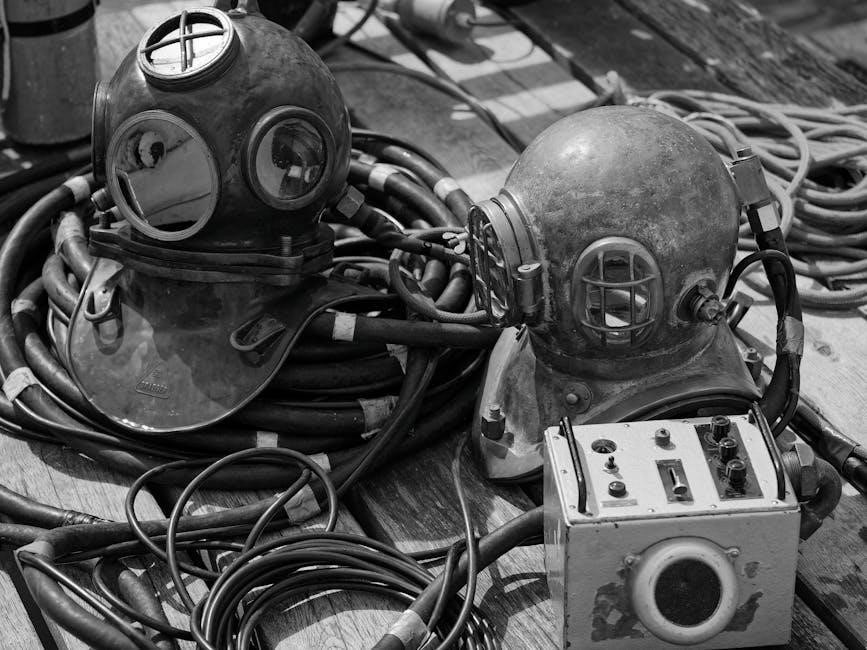
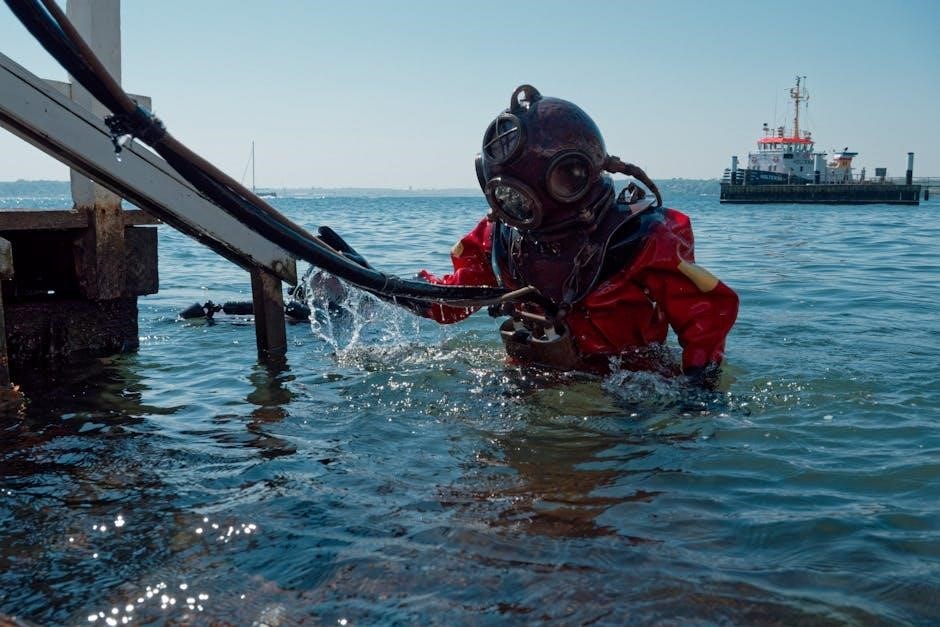
Equipment and Procedures for surface supplied diving, as detailed in the U.S. Navy Diving Manual, are presented with exacting precision. The manual covers everything from the diving helmet – including various models and their specific functionalities – to the umbilicals, hoses, and communication systems essential for maintaining contact with the surface.
Detailed procedures are outlined for pre-dive checks, donning and doffing equipment, underwater tasks, and emergency ascent protocols. Emphasis is placed on teamwork, communication, and adherence to established safety standards. The manual’s illustrations and diagrams provide clear visual guidance, ensuring divers understand the proper use and maintenance of all equipment, minimizing risk and maximizing operational effectiveness.
Gas Mixtures and Management
Gas Mixtures and Management are critical components addressed extensively within the U.S. Navy Diving Manual. It details the composition of various breathing gas mixtures, including air, enriched air nitrox, and helium-oxygen blends, tailored for different depths and operational requirements.
The manual provides comprehensive guidance on gas planning, partial pressure calculations, and the physiological effects of each gas component; Procedures for gas supply, monitoring, and switching are meticulously outlined, alongside protocols for managing gas contamination and emergency situations. Safe gas handling practices and the prevention of oxygen toxicity and nitrogen narcosis are paramount, ensuring diver safety and mission success.
SCUBA Diving Operations
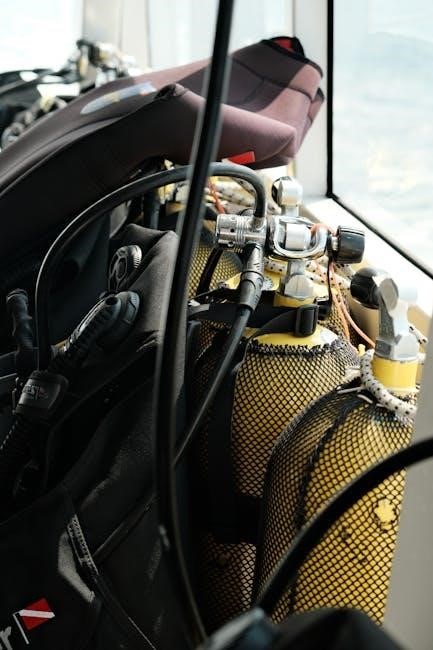
SCUBA Diving Operations, as detailed in the U.S. Navy Diving Manual, cover a broad spectrum of procedures for self-contained underwater breathing apparatus utilization. The manual emphasizes meticulous equipment considerations, including regulator maintenance, buoyancy control device (BCD) operation, and dive computer functionality.
Dive planning and execution are thoroughly addressed, encompassing pre-dive checks, buddy procedures, underwater navigation, and emergency protocols. The manual stresses the importance of adhering to established depth and time limits, proper ascent rates, and effective communication techniques. It provides guidance for various SCUBA diving scenarios, ensuring safe and efficient underwater operations.
Equipment Considerations
Equipment Considerations within the U.S. Navy Diving Manual’s SCUBA section are paramount for diver safety and mission success. The manual details rigorous inspection protocols for regulators, ensuring proper functionality and preventing free flows. Buoyancy Compensators (BCDs) require careful assessment of inflation/deflation systems and material integrity.
Dive computers are scrutinized for accurate depth, time, and decompression calculations. Proper mask fit and fin selection are also addressed, alongside the importance of appropriate exposure protection. The manual emphasizes regular maintenance and replacement of worn or damaged components, adhering to strict Navy standards for reliability and performance.
Dive Planning and Execution
Dive Planning and Execution, as detailed in the U.S. Navy Diving Manual, prioritizes meticulous preparation and adherence to established procedures. This includes comprehensive pre-dive briefings covering objectives, potential hazards, and emergency protocols. Detailed dive profiles, factoring in depth, bottom time, and gas mixtures, are essential.
The manual stresses the importance of buddy checks, equipment verification, and contingency planning for various scenarios. During execution, divers must maintain situational awareness, monitor gas supply, and communicate effectively. Post-dive procedures involve thorough equipment inspection and reporting any anomalies, ensuring continuous improvement in operational safety.
Closed-Circuit and Semiclosed-Circuit Diving
Closed-Circuit and Semiclosed-Circuit Diving, as outlined in the U.S. Navy Diving Manual, represents advanced underwater techniques demanding specialized training and equipment. These systems recycle breathing gas, optimizing underwater endurance and minimizing bubble trails for covert operations.
The manual details system overviews, emphasizing the critical role of gas analyzers and scrubber maintenance. Operational guidelines focus on precise monitoring of partial pressures, managing oxygen toxicity, and mitigating carbon dioxide buildup. Rigorous procedures for pre-dive checks, emergency bailout, and post-dive analysis are paramount for diver safety and mission success.
System Overview
The U.S. Navy Diving Manual’s coverage of closed-circuit and semiclose-circuit systems details intricate components. These include rebreathers, oxygen partial pressure controllers, and carbon dioxide scrubbers, all vital for gas reclamation. The manual emphasizes understanding the cyclical process of gas flow, highlighting the scrubber’s role in removing CO2 and maintaining breathable air.
It explains the function of diluent gas, used to adjust buoyancy and maintain optimal oxygen levels. Diagrams illustrate gas pathways, and detailed descriptions cover loop resistance and work of breathing. Proper system configuration and pre-dive testing are stressed to ensure reliable operation during complex underwater missions.
Operational Guidelines
The U.S. Navy Diving Manual provides stringent operational guidelines for closed-circuit and semiclose-circuit diving. These protocols cover pre-dive checks, including meticulous system analysis and buddy checks, ensuring all components function correctly. The manual details procedures for monitoring gas partial pressures, loop volume, and scrubber duration throughout the dive.
Emergency procedures are thoroughly outlined, addressing scenarios like scrubber breakthrough, loop flooding, and bailout requirements. Divers are instructed on proper ascent rates and decompression schedules tailored to the specific gas mixtures used. Emphasis is placed on maintaining situational awareness and effective communication with surface support personnel.

Physiology and Medicine for Navy Divers
The U.S. Navy Diving Manual extensively covers decompression theory, dive-related injuries like DCS and AGE, and detailed medical evaluations for diver safety.
Decompression Theory and Practice
The U.S. Navy Diving Manual dedicates significant attention to decompression, a critical aspect of safe diving operations. It details the physiological principles behind inert gas absorption and elimination within the body’s tissues during and after dives.
The manual outlines various decompression models and tables, providing divers with the necessary tools to plan dives that minimize the risk of decompression sickness (DCS). Practical application is emphasized, covering ascent rates, safety stops, and procedures for managing potential decompression-related issues.
Furthermore, the manual addresses factors influencing decompression, such as dive depth, bottom time, gas mixtures, and individual diver physiology, ensuring a thorough understanding of this vital safety component.
Dive-Related Injuries
The U.S. Navy Diving Manual provides extensive coverage of potential dive-related injuries, emphasizing prevention, recognition, and treatment. A primary focus is on Decompression Sickness (DCS), detailing its causes, symptoms, and appropriate first aid and medical interventions.
The manual also thoroughly addresses Arterial Gas Embolism (AGE), a more severe and potentially life-threatening condition, outlining specific emergency procedures. Beyond these, it covers barotrauma, nitrogen narcosis, and other hazards associated with underwater environments.
Detailed guidance is provided on diver evaluation, including neurological assessments, and the importance of prompt medical attention following suspected injury, ensuring comprehensive diver safety protocols.
Decompression Sickness (DCS)
The U.S. Navy Diving Manual dedicates significant attention to Decompression Sickness (DCS), explaining its formation due to nitrogen bubbles in tissues during ascent. It details various types of DCS, categorized by symptom location – joints, skin, neurological, and pulmonary.
The manual outlines preventative measures, including adherence to dive tables and profiles, proper pre-dive preparation, and avoidance of contributing factors. It provides comprehensive first aid protocols, emphasizing immediate oxygen administration and positioning the diver.
Furthermore, it describes the role of recompression chambers in DCS treatment, detailing chamber procedures and the importance of prompt medical evaluation for suspected cases, ensuring optimal diver care.
Arterial Gas Embolism (AGE)
The U.S. Navy Diving Manual thoroughly addresses Arterial Gas Embolism (AGE), a severe and potentially fatal condition occurring when gas bubbles enter the arterial bloodstream during ascent. It differentiates AGE from DCS, highlighting the immediate neurological symptoms like paralysis, unconsciousness, and visual disturbances.
The manual stresses the critical importance of immediate treatment, focusing on 100% oxygen administration and rapid transport to a recompression chamber. It details specific emergency procedures, including proper diver positioning to minimize bubble migration.
Preventative measures, such as avoiding breath-holding and rapid ascents, are emphasized, alongside a clear understanding of the physiological mechanisms underlying AGE development and its potentially devastating consequences.
Medical Evaluation of Divers
The U.S. Navy Diving Manual dedicates significant attention to Medical Evaluation of Divers, outlining stringent pre-dive, during-dive, and post-dive assessments. It details comprehensive medical standards for diver qualification, identifying conditions that may predispose individuals to dive-related injuries.
The manual emphasizes the role of the Dive Medical Officer (DMO) in evaluating diver fitness, managing potential health concerns, and overseeing emergency medical support. It provides guidance on conducting thorough physical examinations and interpreting relevant medical tests.
Post-dive evaluations are crucial for identifying early signs of decompression sickness or other complications, ensuring prompt and appropriate medical intervention to safeguard diver health and well-being.
Equipment Detailed in the Manual
The U.S. Navy Diving Manual thoroughly covers essential equipment, including diving helmets, masks, underwater communication systems, and advanced dive computers for monitoring.
Diving Helmets and Masks
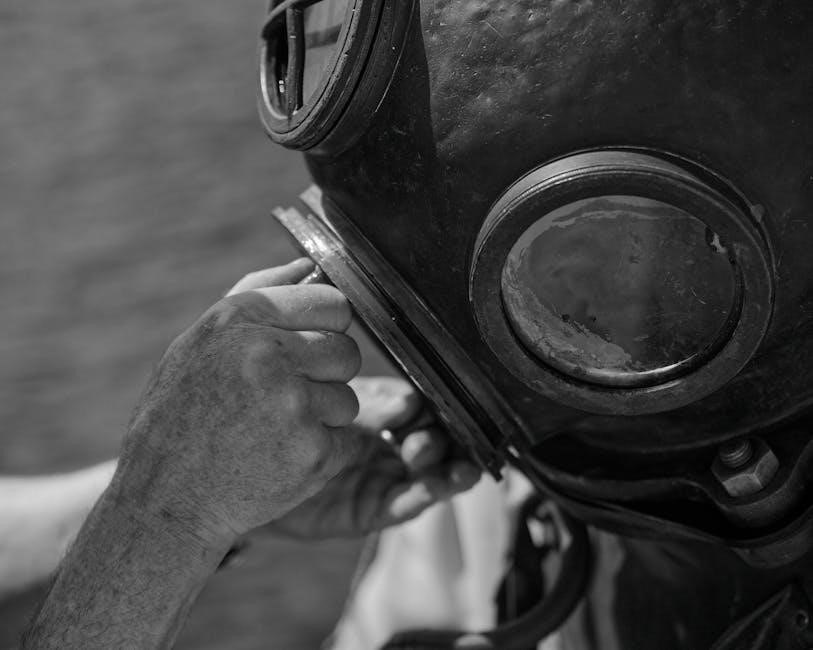
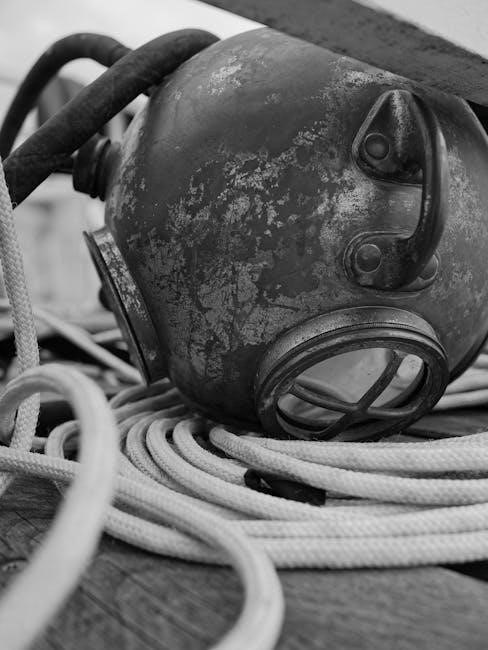
The U.S. Navy Diving Manual dedicates significant attention to diving helmets and masks, recognizing their critical role in underwater operations. Historically, the manual’s evolution reflects advancements in helmet design, from the classic copper helmets used in early salvage work to modern, lightweight iterations.
Detailed descriptions cover helmet components, including ports, valves, and communication systems. The manual outlines proper inspection, maintenance, and repair procedures to ensure operational reliability and diver safety. Mask selection criteria are also addressed, emphasizing features like field of vision, fit, and lens materials.
Furthermore, the manual details the integration of helmets and masks with other diving equipment, such as surface supply systems and underwater lights, providing a holistic understanding of their function within a complete diving apparatus.
Underwater Communication Systems
The U.S. Navy Diving Manual thoroughly covers underwater communication systems, vital for coordinating divers and maintaining operational control. The manual details various technologies, from traditional wired systems utilizing helmets and umbilicals to modern wireless options offering greater mobility;
It explains the principles of underwater acoustics and signal transmission, addressing factors like noise interference and signal attenuation. Detailed procedures are provided for testing, calibrating, and troubleshooting communication equipment.
The manual emphasizes standardized communication protocols and emergency procedures, ensuring clear and concise messaging between divers, the surface team, and support vessels. It also addresses the importance of redundancy and backup systems to maintain communication in critical situations.
Dive Computers and Monitoring Devices
The U.S. Navy Diving Manual dedicates significant attention to dive computers and monitoring devices, recognizing their crucial role in diver safety and mission effectiveness. It details the functionality of various instruments, including depth gauges, bottom timers, and sophisticated multi-gas dive computers.
The manual explains the algorithms used for decompression calculations and the importance of accurate data input. It covers the use of surface monitoring equipment to track diver location, physiological parameters, and gas consumption.
Emphasis is placed on proper calibration, maintenance, and troubleshooting of these devices, alongside procedures for interpreting data and responding to alarms. The manual also addresses the limitations of technology and the importance of diver judgment.
Training and Qualification
The U.S. Navy Diving Manual outlines a rigorous training program, establishing distinct levels of diver qualification based on expertise and operational capabilities.

Navy Diver Training Program
The Navy Diver Training Program is a demanding curriculum designed to prepare individuals for the complex and hazardous environments encountered in underwater operations. This program, detailed within the U.S. Navy Diving Manual, progresses through several phases, beginning with basic diving principles and safety protocols.
Students learn surface supplied diving techniques, SCUBA operations, and the intricacies of closed and semi-closed circuit systems. A significant portion of the training focuses on underwater physiology and the prevention/treatment of dive-related injuries, such as decompression sickness and arterial gas embolism. Practical application is emphasized through extensive in-water exercises and simulated real-world scenarios, ensuring divers are fully prepared for operational deployments. The program consistently evolves, incorporating the latest advancements in diving technology and medical understanding.
Levels of Diver Qualification
The U.S. Navy Diving Manual outlines a tiered system of diver qualifications, reflecting increasing expertise and responsibility. Divers progress from basic qualification, enabling fundamental underwater tasks, to more advanced levels requiring specialized training. These include Surface Supplied Diving qualifications, allowing operation with umbilical support, and SCUBA certifications for self-contained underwater breathing apparatus.
Further advancement leads to Mixed Gas Diving qualifications, essential for deep saturation operations, and ultimately, to designations like Master Diver. Each level demands rigorous testing, demonstrating proficiency in equipment operation, emergency procedures, and physiological understanding. Qualification levels dictate the types of dives a diver is authorized to perform, ensuring safety and mission success. Continuous training and evaluation are integral to maintaining these qualifications.
Accessing the U.S. Navy Diving Manual
The U.S. Navy Diving Manual is readily available through the NAVSEA website, Amazon for purchase, and often as free PDF downloads from official sources.
NAVSEA Website
The Naval Sea Systems Command (NAVSEA) website serves as the official source for accessing the latest revisions of the U.S. Navy Diving Manual. As the primary governing body for naval systems, NAVSEA maintains a dedicated section within its online resources specifically for diving publications.
This section, under SUPSALV (Supervisor of Salvage and Diving), provides direct access to downloadable manuals, ensuring users have the most current and approved version. Users can navigate to the 00C3 Diving section to locate the manual. Accessing the manual through NAVSEA guarantees authenticity and adherence to official Navy standards, crucial for professional divers and those requiring precise, up-to-date information regarding diving procedures and safety protocols.
Availability on Amazon
The U.S. Navy Diving Manual is readily available for purchase through Amazon, offering both new and potentially used copies of various revisions. Currently, Revision 7e is listed, showcasing the manual’s continued relevance and demand within the diving community. Amazon provides a convenient platform for acquiring physical copies, catering to those who prefer a tangible resource over digital downloads.
Customers can benefit from Amazon’s established shipping network and customer service. The availability of the manual on Amazon also includes options like the “Navy Diving Manual ⏤ Revision 7 ⎯ Book 2”, offering specialized content. Checking Amazon ensures access to different editions and formats to suit individual needs.
Free PDF Downloads
The U.S. Navy Diving Manual, particularly older revisions, is accessible as a free PDF download from official U.S. Navy and Army public websites. This provides a cost-effective alternative to purchasing a physical copy, making vital diving information readily available to a wider audience. The availability of these PDFs is a significant benefit for civilian divers and those seeking a supplemental resource.
Compared to the NOAA Diving Manual, the Navy manual’s PDF version offers a more concise and procedural approach. While the official NAVSEA website is a primary source, various other platforms host these downloadable files, ensuring broad access to this valuable documentation.