
it band syndrome stretches pdf
Understanding IT Band Syndrome
IT Band Syndrome arises from friction where the iliotibial band rubs against the femur; preventative measures and targeted stretches are crucial for relief.
Understanding the root cause—often biomechanical issues or overuse—is key to effective treatment and avoiding recurrence of discomfort.
Proper diagnosis and a tailored approach, including stretching and strengthening, are essential components of a successful recovery plan.
What is the IT Band?
The iliotibial (IT) band is a thick band of fibrous tissue that extends along the outside of the thigh, from the hip to just below the knee. It’s not a muscle, but a strong connective tissue crucial for leg stability during movement.
This band plays a vital role in supporting the knee and hip joints, assisting with functions like walking, running, and jumping. However, due to its structure and function, it can become tight or inflamed, leading to IT Band Syndrome.
The IT band originates at the iliac crest and inserts just below the knee, and its consistent rubbing against the lateral femoral epicondyle during leg motion can cause irritation and pain. Understanding its anatomy is key to comprehending how and why IT Band Syndrome develops.
Causes of IT Band Syndrome
IT Band Syndrome typically arises from repetitive friction between the IT band and the lateral femoral epicondyle. Several factors contribute to this, including overuse during activities like running, cycling, or hiking.
Biomechanical issues, such as improper running form, leg length discrepancies, or foot pronation, can exacerbate the problem. Weakness in the hip abductors and gluteal muscles often plays a significant role, leading to altered movement patterns.
Insufficient stretching of the IT band, hamstrings, and quadriceps can also contribute to tightness and increased friction. A sudden increase in training intensity or inadequate warm-up routines can further predispose individuals to developing this condition.

Stretches for IT Band Syndrome Relief
Targeted stretches, like piriformis, leg crossover, and calf stretches, are vital for alleviating IT band tension and restoring flexibility for optimal recovery.
Glute Stretches
Glute stretches are foundational for IT band syndrome relief, as tight glutes contribute significantly to the issue. The piriformis stretch, for example, involves lying on your back, bending your knees, and pulling one foot towards your chest while rotating the shin.
This action effectively targets the piriformis muscle, which can compress the sciatic nerve and exacerbate IT band problems. Hold this stretch for approximately 30 seconds, repeating five times on each leg. Another beneficial technique involves looping a strap around your foot while lying down and gently pulling the leg across your body, maintaining a flat hip position.

Remember to focus on feeling a stretch in the gluteal region, not pain. Consistent glute stretching helps restore proper hip mechanics and reduces strain on the IT band, promoting long-term relief and improved function.
Piriformis Stretch
The Piriformis Stretch is a crucial component in addressing IT band syndrome, targeting the deep rotator muscles of the hip. Begin by lying on your back with knees bent and feet flat on the floor. Raise your left foot towards the ceiling, grasping just below the knee.
Gently pull the foot towards your chest, simultaneously rotating the shin so it’s almost perpendicular to your body. You should feel a stretch deep within the gluteal region of your right hip. Hold this position for 30 seconds, ensuring your back remains flat on the ground.
Repeat this stretch five times on each side. A slight inward turn of the back foot can intensify the stretch. This exercise effectively releases tension in the piriformis muscle, alleviating pressure on the sciatic nerve and reducing IT band irritation.
Leg Crossover Stretch
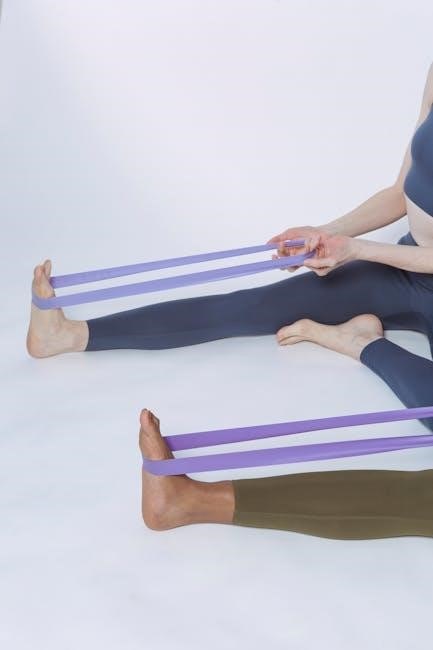
The Leg Crossover Stretch is a beneficial exercise for relieving IT band tension by targeting the glutes and hip adductors. Lie flat on your back with your legs extended. Loop an exercise strap, resistance band, or even a belt around the arch of your right foot.
Keeping your hips flat against the floor, lift your right leg straight up and gently pull it across your body towards the left side. You should feel a stretch along the outer hip and potentially down the IT band. Avoid lifting your hips off the ground during the movement.
Hold this stretch for 30 seconds, repeating it five times on each leg. This stretch improves flexibility and reduces tightness in the muscles that contribute to IT band syndrome.
Calf Stretches
Calf stretches are vital for IT band syndrome relief, as tight calf muscles can contribute to imbalances that exacerbate IT band issues. The Wall Calf Stretch is a simple yet effective method. Stand facing a wall, placing your hands on it for support.
Step one leg back, keeping the heel firmly planted on the ground. Gently lean into the wall until you feel a stretch in the calf of the back leg. Turn your back foot slightly inward to target different calf muscle fibers.
Hold the stretch for 15 to 30 seconds, repeating three times on each leg. This exercise improves ankle flexibility and reduces tension that can pull on the IT band, promoting better biomechanics.
Wall Calf Stretch
The Wall Calf Stretch is a foundational exercise for addressing IT band syndrome, targeting the gastrocnemius and soleus muscles. Begin by standing approximately arm’s length away from a wall, facing it directly. Place your hands on the wall at shoulder height for balance.
Step one leg back, maintaining a straight knee and keeping the heel firmly planted on the ground. Lean forward, gently increasing the stretch in your calf. Turn your back foot slightly inward to emphasize different muscle fibers.
Hold this position for 15 to 30 seconds, focusing on a deep, controlled stretch. Repeat three times per leg. This stretch enhances ankle flexibility and reduces tension, alleviating strain on the IT band and improving overall lower limb mechanics.
Hamstring Stretches
Hamstring flexibility significantly impacts IT band tension. Tight hamstrings can contribute to altered biomechanics, increasing stress on the band. A simple seated hamstring stretch involves sitting on the floor with legs extended straight out. Reach towards your toes, keeping your back as straight as possible.
Alternatively, lie on your back and loop a towel or resistance band around one foot. Gently pull the leg towards your chest, keeping the knee as straight as comfortable. Hold for 30 seconds, repeating several times on each leg.
Focus on feeling the stretch along the back of your thigh. Consistent hamstring stretching helps restore proper muscle balance, reducing IT band irritation and promoting healthier movement patterns.
Quadriceps Stretches
Quadriceps tightness can exacerbate IT band syndrome by influencing knee mechanics and increasing strain on the band. A standing quad stretch is easily performed by holding onto a stable surface for balance. Bend one knee, bringing your heel towards your glutes. Gently pull your foot closer to your buttock, feeling the stretch in the front of your thigh.
Another effective stretch involves lying on your side and performing the same motion, using your hand to guide your heel towards your glutes. Hold each stretch for 30 seconds, repeating several times on both legs.
Regularly stretching the quads helps improve flexibility and reduce compensatory stress on the IT band, aiding in pain relief and improved function.

Additional Exercises & Techniques
Foam rolling targets muscle tightness, while side leg lifts and clamshells strengthen hip abductors—crucial for stabilizing the pelvis and reducing IT band stress.
Foam Rolling for IT Band
Foam rolling is a self-myofascial release technique that can help alleviate IT band tension and improve flexibility. Begin by lying on your side with the foam roller positioned under your lower thigh, supporting your weight with your forearm and top leg.
Slowly roll from just above the knee to the hip, pausing on any tender spots for 20-30 seconds. This applies pressure to release knots and adhesions within the IT band and surrounding muscles.

Remember to maintain controlled movements and avoid rolling directly over the knee joint. Focus on the muscle belly rather than the band itself, as direct rolling on the IT band can be painful and ineffective. Incorporate foam rolling into your routine several times a week, or as needed, to manage discomfort and promote recovery.
Side Leg Lifts
Side leg lifts are a beneficial exercise for strengthening the hip abductors, crucial muscles supporting the IT band and overall leg stability. Lie on your side with your legs extended and stacked on top of each other.
Keeping your core engaged and your body in a straight line, slowly lift your top leg towards the ceiling, maintaining a controlled motion. Avoid rotating your hip or bending your knee.
Hold the lifted position for a few seconds, then slowly lower your leg back to the starting position. Repeat 10-15 times on each side. This exercise helps improve hip stability and reduces stress on the IT band, contributing to pain relief and prevention of future issues.
Clamshell Exercises
Clamshell exercises effectively target the gluteus medius, a key muscle for stabilizing the hips and preventing IT band strain. Begin by lying on your side with your knees bent at a 45-degree angle and your feet stacked.
Keeping your feet together, slowly lift your top knee away from the bottom knee, like opening a clamshell. Focus on squeezing your glute muscles during the movement.
Maintain a straight spine and avoid rotating your pelvis. Hold the open position briefly, then slowly return to the starting position. Repeat 10-15 times on each side. Incorporating a resistance band around your thighs can increase the challenge and effectiveness of this exercise, further strengthening the hip abductors.
Preventative Measures
Consistent stretching, strength training for supporting muscles, and gradual activity modification are vital for preventing IT Band Syndrome recurrence and maintaining optimal function.
Proper footwear and a thorough warm-up/cool-down routine further minimize risk and promote long-term joint health.
Proper Warm-up Routine
A dynamic warm-up is crucial before any activity to prepare the muscles and tissues for exertion, reducing the risk of IT Band Syndrome. Begin with 5-10 minutes of light cardio, such as jogging or cycling, to increase blood flow.
Follow this with dynamic stretches like leg swings (forward, backward, and sideways), torso twists, and walking lunges. These movements mimic the actions of your activity, improving flexibility and range of motion.
Specifically, incorporate exercises that target the glutes, quads, and hamstrings, as these muscle groups directly influence IT band function. Gentle hip circles and knee bends are also beneficial.
Avoid static stretching (holding a stretch for an extended period) before exercise, as it can temporarily reduce muscle power. A well-executed warm-up primes your body, minimizing strain on the IT band during activity.
Cool-down Stretching
A dedicated cool-down is vital post-exercise to gradually reduce muscle tension and improve flexibility, aiding in IT Band Syndrome prevention. Begin with 5-10 minutes of light cardio, like walking, to allow your heart rate to return to normal.
Follow with static stretches, holding each for 30 seconds. Focus on the glutes (piriformis stretch), hamstrings, quads, and calves – key areas impacting the IT band. Lie on your back and pull your heel towards your buttock for hamstring stretches.
For quads, gently pull your heel towards your glutes while standing. Wall calf stretches are also effective. Remember to breathe deeply throughout each stretch, promoting relaxation and increasing range of motion.
Consistent cool-down stretching helps restore muscle length and reduces the risk of post-exercise soreness and IT band tightness.
Strength Training for Supporting Muscles
Strengthening muscles surrounding the IT band is crucial for stability and preventing re-injury. Weak glutes and hip abductors contribute significantly to IT Band Syndrome, altering biomechanics.
Glute Strengthening: Exercises like hip thrusts, glute bridges, and squats build gluteal muscle mass, improving hip extension and reducing stress on the IT band. Perform three sets of 10-12 repetitions;
Hip Abductor Strengthening: Side leg lifts and clamshell exercises target the hip abductors, enhancing lateral stability. Lie on your side and lift your top leg, keeping your core engaged. Aim for three sets of 15-20 repetitions.
Consistent strength training improves muscle balance, supports proper form during activity, and minimizes IT band friction, promoting long-term relief.
Glute Strengthening
Strong gluteal muscles are fundamental for stabilizing the pelvis and controlling hip movement, directly impacting IT band function. Weak glutes often lead to altered biomechanics, increasing stress on the band.
Hip Thrusts: Lie with your upper back supported on a bench, feet flat on the floor, and lift your hips, squeezing your glutes at the top. Perform three sets of 10-12 repetitions.
Glute Bridges: Similar to hip thrusts, but performed with your upper back on the floor. Focus on controlled movements and full gluteal contraction. Three sets of 15 repetitions are recommended.
Squats: Ensure proper form – chest up, back straight, and weight in your heels – to effectively engage the glutes. Incorporate variations like goblet squats for added challenge.
Consistent glute strengthening improves pelvic stability and reduces IT band strain.
Hip Abductor Strengthening
Hip abductors – muscles on the outer hip – play a vital role in stabilizing the pelvis during single-leg activities, preventing excessive inward motion that can exacerbate IT band issues. Strengthening these muscles is crucial for restoring proper biomechanics.
Side Leg Raises: Lie on your side, keeping your legs straight and core engaged. Slowly lift your top leg towards the ceiling, maintaining control. Perform three sets of 15-20 repetitions per leg.
Clamshells: Lie on your side with knees bent and feet stacked. Keeping your feet together, lift your top knee, engaging your glute medius. Three sets of 20 repetitions are beneficial.
Banded Walks: Place a resistance band around your ankles and walk sideways, maintaining tension on the band. This exercise effectively targets the hip abductors.
Regular hip abductor strengthening enhances pelvic control and minimizes IT band stress.
Activity Modification
Activity modification is a cornerstone of IT band syndrome management, aiming to reduce the stress on the affected area and allow for healing. This doesn’t necessarily mean complete rest, but rather a strategic adjustment of your routine.

Reduce Impact: Temporarily decrease high-impact activities like running or jumping. Consider switching to lower-impact options such as swimming or cycling.
Distance & Intensity: If running is essential, shorten your distances and reduce your pace. Avoid hills, as they increase IT band strain.
Cross-Training: Incorporate diverse activities to avoid repetitive stress on the same muscles. Varying your workouts promotes balanced development.

Listen to your body and gradually increase activity levels as your symptoms subside. Ignoring pain will only prolong recovery.
Proper Footwear
Proper footwear plays a surprisingly significant role in preventing and managing IT band syndrome. Ill-fitting or worn-out shoes can contribute to biomechanical imbalances that exacerbate the condition.
Support & Cushioning: Choose shoes that provide adequate support and cushioning, especially if you have high arches or overpronate (feet roll inward).
Stability Features: Look for shoes with stability features to control excessive motion and maintain proper alignment.
Regular Replacement: Replace your running or athletic shoes every 300-500 miles, or when the cushioning begins to break down. Worn shoes lose their supportive properties.
Consider a professional shoe fitting to determine the best type of shoe for your foot type and activity level. Correct footwear can significantly reduce stress on the IT band.

When to Seek Professional Help
Persistent pain despite self-treatment warrants a visit to a physical therapist or doctor for a comprehensive evaluation and personalized treatment plan.
Don’t delay seeking guidance if symptoms worsen, limiting activity, or if you suspect a more serious underlying issue is present.
Physical Therapy
Physical therapy is a cornerstone of IT Band Syndrome treatment, offering a structured approach to recovery. A therapist will conduct a thorough assessment to pinpoint the specific biomechanical factors contributing to your pain.
Treatment often includes a combination of techniques, such as foam rolling to release tension in the IT band and surrounding muscles. Targeted stretches, like those for the glutes, hamstrings, and calves, are prescribed to improve flexibility and reduce strain.
Furthermore, a physical therapist will design a strengthening program focusing on the glutes, hip abductors, and core muscles to provide better support and stability. They’ll also address any gait abnormalities or movement patterns that may be exacerbating the condition, ensuring a return to activity with minimized risk of re-injury.
Medical Evaluation
A medical evaluation is crucial for accurately diagnosing IT Band Syndrome and ruling out other potential causes of lateral knee pain. A physician will perform a physical exam, assessing your range of motion, tenderness, and specific movements that trigger your symptoms.
They may inquire about your activity level, training history, and any recent changes in your routine. While IT Band Syndrome is often diagnosed clinically, imaging tests like X-rays or MRIs might be ordered to exclude other conditions, such as meniscus tears or stress fractures.
A proper diagnosis ensures you receive the most appropriate treatment plan, which may include physical therapy, medication, or, in rare cases, surgical intervention. Self-diagnosis can be misleading, so seeking professional guidance is essential for optimal recovery.