
guide for blind runners
Guide for Blind Runners: A Comprehensive Overview (Updated 12/11/2025)
This guide explores the world of running for the visually impaired, detailing essential aspects from gear and training to legal considerations and inspirational athlete stories.

Recent events, like the 2025 Houston half marathon, showcase the growing participation and dedication within this community, highlighting the crucial role of running guides.
From novice programs to Kilimanjaro hikes, this resource aims to empower blind runners and their guides with knowledge for safe and fulfilling experiences.
Blind running, a testament to human resilience and determination, is rapidly gaining recognition as a viable and rewarding athletic pursuit. It’s more than just physical activity; it’s about breaking barriers and demonstrating that visual impairment doesn’t define limitations.
The stories emerging, like Louise Simpson’s initial hesitation in 2009, and the recent achievements of athletes tackling challenges like Mt. Kilimanjaro, illustrate the transformative power of running.
Central to this endeavor is the guide runner – a sighted individual who provides verbal cues and, often, a physical tether, ensuring safety and synchronization. The partnership between runner and guide is paramount, built on trust, communication, and shared goals. This guide will delve into the intricacies of this unique sport, offering a comprehensive overview for both runners and potential guides.
The Benefits of Running for the Visually Impaired
Running offers profound physical and mental benefits for individuals with visual impairments, mirroring those experienced by sighted runners. These include improved cardiovascular health, increased endurance, and enhanced muscle strength. Beyond the physical, running fosters a sense of independence and self-reliance, challenging preconceived notions about limitations.
The discipline and focus required can boost confidence and reduce stress. The social aspect, particularly through guide running partnerships, combats isolation and builds community.
As highlighted by recent participation in events like the Houston half marathon, running provides a platform for achievement and visibility, inspiring others and promoting inclusivity. It’s a powerful tool for empowerment and personal growth.
Understanding Different Levels of Visual Impairment & Running
Visual impairment exists on a spectrum, ranging from low vision to total blindness, significantly impacting running approaches. Individuals with some residual vision may benefit from contrast cues and larger guide circles. Those with limited or no sight rely heavily on verbal communication and tactile cues from their guides.
Understanding a runner’s specific needs is paramount. A legally blind runner, like Mike Tubiak, can achieve remarkable feats with a skilled guide.
Adaptations are crucial; route familiarity, detailed briefings, and consistent communication are essential for safety and confidence. Recognizing these varying needs ensures a positive and effective running experience for all;

Essential Gear for Blind Runners
Beyond standard running apparel, blind runners require specific gear for safety and performance. High-visibility clothing for both runner and guide is crucial, especially in low-light conditions. A reliable communication system, like bone-conduction headphones, allows for clear verbal cues without blocking ambient sounds.
The tether, a vital connection, demands careful selection (discussed later). Runners may also benefit from specialized watches with tactile markings or voice output.
Properly laced shoes, as emphasized by Louise Simpson’s experience, are fundamental. Prioritizing comfort, support, and secure fit is paramount for injury prevention and enjoyable runs.
Running Shoes & Apparel Considerations

Shoe selection is paramount, focusing on a secure fit to prevent slippage and potential trips. Runners should prioritize cushioning and support tailored to their gait and running surface. Regularly checking laces, as recalled by Louise Simpson, is non-negotiable.
Apparel should be comfortable, breathable, and non-restrictive. Consider fabrics that wick away moisture. High-visibility colors and reflective elements are essential for both runner and guide, enhancing safety during all conditions.
Avoid loose clothing that could become entangled or impede movement. Prioritize functionality and safety over fashion, ensuring a confident and secure running experience.
Assistive Technology for Running
While guide running remains central, technology offers supplementary support. Audio cues, delivered via headphones, can provide directional information and alerts about upcoming turns or obstacles. GPS-enabled watches with voice output are also beneficial.
Apps designed for runners can be adapted to provide auditory feedback on pace, distance, and heart rate. However, reliance on technology should be balanced with strong communication and trust in the guide.
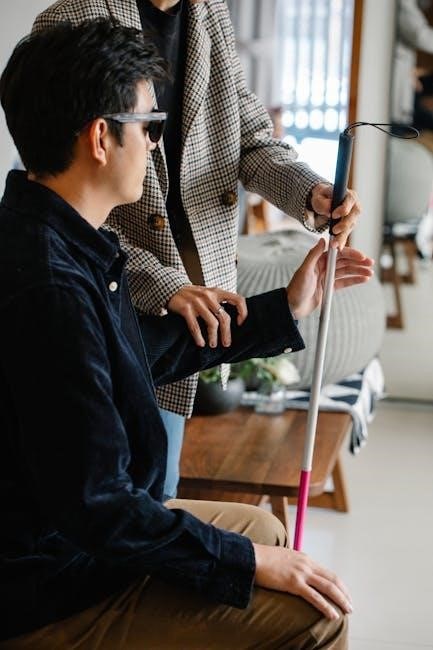
Emerging technologies are continually being explored, but currently, no device fully replaces the nuanced awareness and judgment of a skilled human guide.
Guide Running: The Core Partnership
Guide running transcends simple assistance; it’s a collaborative partnership built on trust, communication, and shared goals. The guide acts as the runner’s eyes, verbally conveying environmental information – terrain changes, obstacles, and pace.
Successful partnerships require mutual respect and understanding. The runner relies on the guide’s accurate descriptions, while the guide adapts to the runner’s pace and preferences.
This symbiotic relationship allows visually impaired individuals to experience the freedom and benefits of running, fostering independence and athletic achievement, as seen in recent marathon completions.
Qualities of a Good Running Guide
An effective running guide possesses several key attributes. First, consistent and clear communication is paramount, providing detailed verbal cues about the surroundings. Patience and adaptability are crucial, as runners have varying paces and needs.
A strong sense of spatial awareness and the ability to anticipate obstacles are vital for safety. Responsibility and reliability are non-negotiable; the runner’s well-being depends on the guide’s attentiveness.
Empathy and a genuine desire to support the runner’s goals foster a positive and motivating partnership, mirroring the dedication shown in events like the Houston half marathon.
Communication Strategies Between Runner and Guide
Effective communication is the cornerstone of a successful guide-runner partnership. Guides should provide constant verbal updates regarding terrain changes – “slight incline,” “gravel approaching,” or “pothole left.” Clear, concise language is essential, avoiding ambiguity.
Regular check-ins – “How are you feeling?” – ensure the runner’s comfort and allow for pace adjustments. Pre-run discussions about the route and potential hazards are vital.
Establishing code words for specific needs (e.g., “easy” for slowing down) streamlines communication. Feedback from the runner is crucial; open dialogue builds trust and enhances the experience.
Tethering Techniques: Ensuring Safety & Synchronization
Proper tethering provides a crucial physical connection, enhancing safety and rhythm between guide and runner. The guide holds the tether with a relaxed grip, avoiding pulling or jerking motions. A short, comfortable length is ideal, allowing for natural stride and responsiveness.
The tether should be held slightly to the side, not directly in front, to avoid interference with the runner’s arm swing. Practice release techniques are paramount; the guide must be able to quickly detach the tether if needed.
Consistent tether tension communicates changes in pace or direction. Regularly check the tether’s condition for wear and tear, ensuring a secure connection throughout the run;
Types of Tethers & Their Uses
Various tether options cater to different runner preferences and needs. Traditional looped tethers, held in the hand, offer a direct connection and are widely used. Adjustable tethers allow for customized length, accommodating varying strides and running styles.
Fabric tethers provide a softer feel, reducing friction and discomfort. Bungee cord tethers offer some elasticity, absorbing shock and providing a more forgiving connection. Specialized chest-worn tethers distribute pressure and can be beneficial for longer distances.
The choice depends on comfort, running pace, and terrain. Consider durability and ease of release when selecting a tether for optimal safety and performance.
Proper Tether Handling & Release Mechanisms
Consistent tether handling is paramount for safety and synchronization. Guides should maintain a relaxed but firm grip, avoiding jerky movements. Clear communication is vital – runners and guides must agree on signals for pace changes or obstacles.
Release mechanisms are crucial for emergencies. Tethers should incorporate quick-release buckles or knots that can be easily undone by either party. Practice release drills regularly to ensure swift action when needed. Avoid complex mechanisms that could hinder rapid disengagement.
Guides must be aware of the tether’s position at all times, preventing trips or entanglement. Regularly inspect the tether for wear and tear, replacing it when necessary.
Route Planning & Safety Considerations
Meticulous route planning is essential for blind runners’ safety. Prioritize flat, even surfaces with minimal obstacles. Avoid routes with heavy traffic, construction, or unpredictable pedestrian flow. Scout the course beforehand to identify potential hazards like potholes or uneven pavement.
Communicate the route clearly to the runner, detailing turns, elevation changes, and anticipated obstacles. Consider weather conditions – rain or ice can significantly increase risks. Inform someone of your route and estimated return time for added security.
Always prioritize well-lit areas, especially during dawn or dusk.
Choosing Safe Running Routes
Selecting appropriate routes is paramount for blind runners’ well-being. Opt for dedicated running paths, well-maintained trails, or quiet residential streets. Parks and tracks offer predictable surfaces and fewer unexpected obstacles compared to busy city sidewalks.
Avoid routes with frequent road crossings or complex intersections. Prioritize routes with consistent footing, minimizing gravel, sand, or uneven terrain. Consider the presence of shade, especially during warmer months, to prevent overheating.
Regularly assess routes for new hazards and adjust plans accordingly. Familiarity breeds safety; repeating routes allows both runner and guide to anticipate challenges.
Obstacle Awareness & Navigation Techniques
Effective obstacle awareness relies heavily on clear communication between runner and guide. The guide must proactively verbalize upcoming hazards – potholes, pedestrians, parked cars, or changes in terrain – using precise language like “slight dip ahead” or “person on the right.”
Employ a consistent calling system; for example, “step up” for curbs or “step down” for inclines. The guide should also anticipate and describe changes in wind direction or sunlight.
Practice navigating turns and corners, ensuring the runner understands the angle and radius. Utilize auditory cues, like traffic sounds, to enhance spatial awareness.
Training Plans for Blind Runners
Beginner programs should prioritize building a solid base of endurance and trust between runner and guide. Start with short, slow runs, focusing on consistent pacing and communication. Gradually increase distance and intensity, incorporating interval training and hill work as fitness improves.

Advanced plans for races and distance require a more structured approach. This includes longer runs, speed workouts, and strength training to enhance performance and prevent injuries. Consider incorporating cross-training to maintain overall fitness.
Adapt training to individual needs and goals, always prioritizing safety and open communication.

Beginner Running Programs
Initial programs should emphasize building confidence and a strong runner-guide partnership. Begin with walk-run intervals, gradually increasing running duration and decreasing walking breaks. Focus on mastering tethering techniques and consistent communication protocols.
Prioritize short, flat routes with minimal obstacles to minimize risk and build familiarity. Introduce basic running form cues, delivered clearly by the guide. Regularly assess comfort levels and adjust the program accordingly;
Celebrate small victories and foster a positive running experience to encourage continued participation and enjoyment.
Advanced Training for Races & Distance
Transitioning to race preparation requires structured long runs, incorporating pace work and hill training, adapted for the runner-guide team. Simulate race conditions during training, including crowded environments and varied terrain. Refine communication strategies for efficient navigation and obstacle avoidance.
Focus on fueling and hydration strategies tailored to the runner’s needs and race distance. Practice race-day logistics, such as aid station access and tether management in a pack. Consider pre-race course familiarization with the guide, if possible.
Prioritize recovery and injury prevention through consistent stretching and cross-training.
Legal & Insurance Aspects of Guide Running
Guide running involves inherent risks, necessitating careful consideration of legal and insurance implications. Waivers are crucial, outlining potential liabilities for both runner and guide, acknowledging the voluntary nature of the partnership. These should be reviewed by legal counsel to ensure enforceability.
Standard personal liability insurance may not cover guide running activities; supplemental coverage is advisable. Explore options through running organizations or specialized insurers. Understand local regulations regarding assisting individuals with disabilities in public spaces.
Clear communication about responsibilities and potential risks is paramount for a safe and legally sound partnership.
Waivers & Liability Considerations
A comprehensive waiver is essential for guide running, protecting both the runner and the guide from potential legal claims. This document should explicitly detail the inherent risks associated with running, including collisions, falls, and navigational errors. It must confirm the runner’s voluntary participation and acknowledgement of their physical condition.
The waiver should address liability for injuries sustained by either party, clarifying responsibilities. Consider including a clause regarding emergency medical treatment and consent for care. Legal review is strongly recommended to ensure the waiver complies with local laws and is enforceable.
Regularly review and update the waiver to reflect changing circumstances or new risks.
Insurance Coverage for Guide Runners
Determining appropriate insurance coverage is crucial for guide runners, as standard personal liability policies may not adequately cover activities involving guiding a visually impaired athlete. Consider supplemental sports liability insurance specifically designed for running or volunteer activities. This coverage can protect against claims of negligence resulting in injury to the runner or third parties.
Guides should verify their homeowner’s or renter’s insurance policies for potential coverage gaps. The runner should also ensure their own health and accident insurance are current. Exploring options through running organizations or clubs may provide access to group rates or specialized policies.
Racing as a Blind Runner
Participating in races requires proactive planning and communication. Blind runners must submit accommodation requests to race organizers well in advance, detailing the need for a sighted guide and tethering arrangements. Clearly outlining these needs ensures a smooth and safe race experience. Race officials will typically assign a designated meeting point and provide guidance on course navigation.
Navigating the race course with a guide demands synchronized movement and constant verbal communication. Familiarizing yourselves with the course map beforehand is beneficial. Remember to discuss strategies for handling crowded areas, water stations, and potential obstacles with your guide.
Race Registration & Accommodation Requests
Registering for a race as a visually impaired runner necessitates early communication with race organizers. Most races require a specific accommodation request form, detailing the runner’s visual impairment and the need for a sighted guide. This form typically asks about tethering preferences and any specific assistance required on the course.
Be prepared to provide documentation verifying your visual impairment if requested. Clearly state your guide’s name and contact information during registration. Follow up with the race director to confirm receipt of your request and discuss logistical details. Proactive communication ensures a positive racing experience.
Navigating Race Courses with a Guide
Successful race navigation relies on consistent communication between runner and guide. The guide should provide clear, concise verbal cues regarding upcoming turns, changes in terrain, and potential obstacles. Descriptive language is key – “slight right” versus simply “right” – allowing the runner to anticipate course adjustments.
Maintain a comfortable pace and consistent tether length. The guide must be aware of surroundings, scanning for hazards and communicating them promptly. Practice navigating similar courses beforehand to build trust and refine communication strategies. Remember, the guide’s role is to enhance, not dictate, the runner’s experience.
Notable Blind Runners & Their Achievements
The world of running showcases incredible visually impaired athletes defying limitations. Kristie Colton, a Harvard graduate, exemplifies this spirit, conquering snowboarding and completing the Boston Marathon. Mike Tubiak, a legally blind runner, recently participated in the 2025 Houston half marathon, tethered to his guide Cameron Byrd.
These stories highlight dedication and partnership. Louise Simpson’s journey, beginning in 2009, demonstrates the transformative power of running. Their achievements inspire, proving that visual impairment isn’t a barrier to athletic success. These runners, alongside countless others, redefine what’s possible.
Inspirational Stories of Visually Impaired Athletes
Louise Simpson’s story, starting in 2009, embodies the courage of blind runners. Her initial reluctance transformed into a passion, showcasing the power of perseverance. Kristie Colton’s ambition to hike Mt. Kilimanjaro, guided by friends, is equally inspiring. Mike Tubiak’s participation in the 2025 Houston half marathon, with Cameron Byrd as his guide, demonstrates dedication.
These athletes aren’t just runners; they are advocates. Their journeys challenge perceptions and promote inclusivity. They prove that limitations are often self-imposed. These narratives emphasize the vital role of guides and the joy of achieving seemingly impossible goals.
Resources & Organizations for Blind Runners
Finding a compatible running guide is often the first hurdle. Online platforms and communities are emerging to connect runners with potential guides, fostering supportive networks. Local running clubs are increasingly welcoming and inclusive, offering opportunities for training and camaraderie.
Dedicated organizations provide specialized resources, including training programs and equipment assistance. These groups often advocate for accessibility in races and promote awareness. Connecting with these resources can significantly enhance the running experience for visually impaired athletes and their guides, building a stronger community.
Finding a Running Guide
Locating a reliable and dedicated running guide is paramount for blind runners. Online platforms are becoming increasingly popular, specifically designed to connect visually impaired athletes with potential guides. Local running clubs often serve as excellent hubs, facilitating introductions and fostering partnerships.
Organizations dedicated to adaptive sports frequently maintain guide databases or offer matching services. Consider reaching out to local universities with track and field programs – students may be eager to volunteer. Prioritize compatibility, shared running goals, and clear communication when selecting a guide.
Online Platforms & Communities
Several online platforms are emerging to specifically connect blind runners with guides. These resources often feature profiles, allowing runners to search based on location, availability, and running pace. Dedicated communities foster support and shared experiences, offering valuable advice and encouragement.
Social media groups dedicated to adaptive sports provide networking opportunities and announcements of local events. Websites focused on visual impairment often include sections for sports and recreation, listing potential guides. Utilizing these digital tools streamlines the search process and expands the potential pool of running partners.
Local Running Clubs & Organizations
Many local running clubs are increasingly welcoming to visually impaired athletes, often willing to pair runners with volunteer guides. Organizations dedicated to disability sports frequently host running programs and events specifically designed for adaptive needs. Reaching out to these groups provides access to experienced guides and a supportive community.
Blindness-specific organizations often collaborate with running clubs to facilitate inclusive training opportunities. Participating in local races can also connect runners with potential guides through event volunteers. Networking within these communities fosters long-term partnerships and promotes accessibility in running.
Maintaining Motivation & Overcoming Challenges
Blind runners, like all athletes, will encounter setbacks and moments of frustration. Cultivating a strong mindset is crucial; focusing on personal progress rather than comparisons is key. Celebrating small victories and acknowledging achievements builds confidence and sustains motivation.

Open communication with a guide is vital for addressing challenges collaboratively. Remembering the joy of running and the benefits to physical and mental well-being can reignite passion. Drawing inspiration from the achievements of other visually impaired athletes provides encouragement and reinforces possibilities.
Dealing with Frustration & Setbacks
Frustration is inevitable when facing challenges in running, especially for visually impaired athletes. Setbacks, like missed cues or unexpected obstacles, can be disheartening. Acknowledging these feelings is the first step; suppressing them hinders progress.
Effective communication with a guide is paramount – openly discuss concerns and collaboratively problem-solve. Reframing setbacks as learning opportunities fosters resilience. Remembering past successes and focusing on controllable aspects, like effort and attitude, rebuilds confidence. Patience and self-compassion are essential for navigating these hurdles.
Building Confidence & Enjoying the Process
Confidence blossoms through consistent progress and celebrating small victories. Focus on personal achievements, not comparisons with sighted runners. A strong guide-runner partnership, built on trust and positive reinforcement, is crucial for fostering self-belief.
Embrace the sensory experience of running – the rhythm of your stride, the feel of the wind, and the connection with your guide. Remember Kristie Colton’s spirit, tackling Kilimanjaro, and find joy in pushing boundaries. Prioritize enjoyment; running should be empowering and fulfilling, not solely focused on performance.