
sourdough schedule pdf
What is Sourdough Bread?
Sourdough is a uniquely fermented bread, utilizing wild yeasts and bacteria, differing from breads leavened with commercial yeast. Historically, it predates modern yeast,
being the standard for millennia before the Middle Ages, and remains a beloved, ancient baking method.
The History of Sourdough
Sourdough’s origins are deeply rooted in ancient civilizations, predating the widespread use of cultivated yeast. For most of human history, it represented the primary method of breadmaking, stretching back thousands of years. Archaeological evidence suggests sourdough production as early as 3000 BCE in ancient Egypt!
The process relied on naturally occurring yeasts and bacteria present in flour and the surrounding environment – a truly wild fermentation. This method continued as the standard until the Middle Ages, when “barm,” a frothy top layer from beer brewing, began to gain popularity as a leavening agent.
However, the real shift occurred in the late 19th and early 20th centuries with the advent of industrially produced baker’s yeast. This offered consistency and speed, gradually eclipsing the more time-consuming sourdough process. Despite this, sourdough never truly disappeared, maintaining a dedicated following and experiencing a significant resurgence in recent years, as bakers rediscover its unique flavor and health benefits.
Sourdough vs. Commercial Yeast Bread
The key difference between sourdough and commercially yeasted bread lies in the leavening agent. Sourdough relies on a “starter” – a living culture of wild yeasts and lactic acid bacteria – for rise and flavor development. Commercial yeast, conversely, utilizes a single strain of Saccharomyces cerevisiae, cultivated for consistent and rapid leavening.
This fundamental difference impacts the bread’s characteristics. Sourdough boasts a complex, tangy flavor profile due to the acids produced during fermentation, alongside a chewier texture and improved digestibility. Commercial yeast breads typically have a milder flavor and softer crumb.
Furthermore, sourdough fermentation breaks down phytic acid in the flour, enhancing nutrient absorption. The slower fermentation process also allows for greater flavor development and a more robust crust. While commercial yeast offers convenience and predictability, sourdough provides a unique sensory experience and a connection to ancient baking traditions.

Understanding Sourdough Starter
A sourdough starter is a living culture of flour and water, harboring wild yeasts and bacteria. It’s the heart of sourdough, providing leavening and contributing to the bread’s unique flavor.
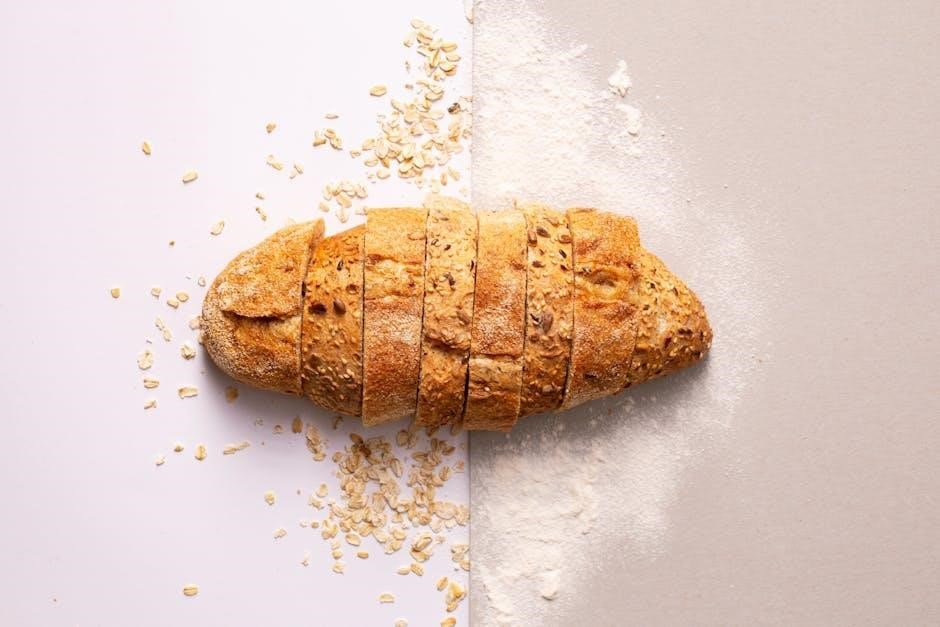
Creating a Sourdough Starter

Embarking on sourdough begins with cultivating your own starter – a blend of flour and water that captures wild yeasts. Initially, combine equal parts (typically 50g each) of unbleached flour and non-chlorinated water in a clean jar. Mix thoroughly, ensuring no dry flour remains, and loosely cover.
Over the next 24 hours, allow the mixture to rest at room temperature (around 70-75°F). You may observe some bubbles forming, indicating initial activity. Don’t be discouraged if nothing happens immediately; patience is key.
Beginning on day two, initiate the feeding process. Discard approximately half of the starter (this prevents excessive buildup) and replenish it with fresh flour and water – again, equal parts. Mix well, cover loosely, and let it rest. Repeat this feeding process daily.
Consistent feeding encourages the growth of beneficial yeasts and bacteria, gradually transforming the mixture into a vibrant, active starter. The starter is ready when it reliably doubles in size within a few hours of feeding, exhibiting a bubbly texture and a slightly tangy aroma.
Maintaining a Sourdough Starter
Once your starter is active, regular maintenance is crucial for sustaining its vitality. Consistent feeding keeps the yeast population thriving. You can maintain it at room temperature with daily feedings, or slow down activity by refrigerating it.
For room temperature maintenance, continue the discard-and-feed routine (equal parts starter, flour, and water) every 24 hours. Observe its rise and fall – a reliable doubling within 4-8 hours indicates a healthy starter.
If refrigerating, feed your starter before placing it in the fridge. It will become dormant, requiring less frequent feeding. Feed it weekly, or bi-weekly, bringing it back to room temperature and feeding it a couple of times before baking to reactivate it.
Signs of a healthy starter include a bubbly texture, a pleasant tangy aroma, and consistent rising after feeding. A neglected starter may develop a layer of liquid (hooch) – simply stir it in before feeding.

Beginner’s Sourdough Schedule
A structured schedule is key for sourdough success, especially for beginners. Consistent feeding and observation of your starter’s activity are vital for predictable results and a flavorful loaf.
Day 1: Initial Starter Feed
Begin your sourdough journey by combining equal parts (typically 50g each) of unbleached flour – all-purpose or whole wheat work well – and non-chlorinated water in a clean jar. Mix thoroughly until no dry flour remains, achieving a thick paste-like consistency. This initial mixture is the foundation of your starter, a living culture of wild yeasts and beneficial bacteria.
Loosely cover the jar with a lid or breathable cloth secured with a rubber band; this allows air circulation while preventing contamination. Place the jar in a warm (around 70-75°F / 21-24°C) location, away from direct sunlight. Avoid metal lids during this stage, as they can react with the starter.
Resist the urge to peek constantly! For the first 24 hours, simply allow the mixture to rest and begin the fermentation process. You likely won’t see much activity on Day 1, and that’s perfectly normal; The goal is to create an environment where wild yeasts can begin to thrive and establish themselves. Patience is crucial at this initial stage.
Day 2-7: Regular Starter Feeding
From Day 2 through 7, establish a consistent feeding schedule to nurture your starter’s growth. Discard approximately half of the starter – this prevents it from becoming overwhelmingly large – and then feed it with fresh flour and water, again using a 1:1:1 ratio (e.g., 50g starter, 50g flour, 50g water). Mix well, ensuring all flour is hydrated.
Continue to loosely cover the jar and maintain a warm environment. Observe your starter closely; you should begin to see signs of activity, such as bubbles forming and an increase in volume. The frequency of feeding can be adjusted based on activity – if it’s very active, feed twice a day.
Consistency is key during this period. Regular feeding provides the yeasts and bacteria with a constant food source, encouraging them to multiply and strengthen. Note the time of each feeding and observe how long it takes for the starter to peak in activity. This will help you understand its rhythm.
Day 8-14: Assessing Starter Activity
During days 8 to 14, closely monitor your starter’s behavior to determine its readiness for baking. A mature starter will reliably double in size within 4-8 hours after feeding, exhibiting numerous bubbles throughout. It should have a slightly tangy, pleasant aroma – avoid starters with unpleasant or moldy smells.
The “float test” is a useful indicator: drop a small spoonful of starter into a glass of water. If it floats, it suggests sufficient gas production and a viable yeast population. However, this isn’t foolproof; a consistently bubbly and doubling starter is more reliable.
Continue the 1:1:1 feeding ratio, and adjust feeding times based on peak activity. If it’s slow to rise, consider switching to a warmer location or increasing the feeding frequency. A strong, active starter is crucial for successful sourdough bread, so patience and observation are vital during this assessment phase.

Basic Sourdough Bread Recipe
This recipe guides beginner bakers through creating a classic sourdough loaf. It emphasizes clear instructions and step-by-step guidance, ensuring success with naturally leavened bread at home.
Ingredients for a Beginner Loaf
For your first sourdough loaf, simplicity is key. You’ll need 500 grams of bread flour – this provides the necessary gluten structure. 350 grams of water, ideally filtered, will hydrate the flour and activate the starter. A crucial component is 100 grams of active sourdough starter; ensure it’s bubbly and doubled in size for optimal rise.
Don’t forget 10 grams of fine sea salt, which controls fermentation and enhances flavor. These five ingredients form the foundation of a beautiful, rustic loaf. While optional, some bakers like to add a tablespoon of olive oil for a softer crumb. Precise measurements are important, especially when starting, so using a kitchen scale is highly recommended for consistent results. Remember, quality ingredients contribute to a superior final product, so choose flour and water you trust!
Step-by-Step Baking Instructions
Begin by combining flour, water, and starter in a large bowl, mixing until a shaggy dough forms. Let it rest (autolyse) for 30-60 minutes to hydrate the flour. Add salt and knead the dough for 8-10 minutes, developing gluten. Bulk ferment in a lightly oiled bowl for 4-6 hours, performing stretch and folds every 30-60 minutes.
Gently shape the dough into a round or oval and place it in a banneton basket lined with flour. Cold proof in the refrigerator overnight (12-18 hours) for enhanced flavor. Preheat your oven to 450°F (232°C) with a Dutch oven inside. Carefully place the dough into the hot Dutch oven, score the top, and bake covered for 20 minutes. Remove the lid and bake for another 25-30 minutes, until golden brown and the internal temperature reaches 205-210°F (96-99°C).

Troubleshooting Common Sourdough Issues
Addressing challenges like dense bread or a lack of rise requires understanding fermentation. Adjusting hydration, starter activity, or proofing times can often resolve these common sourdough baking hurdles.
Dense or Gummy Bread
Experiencing a dense or gummy texture in your sourdough often points to under-proofing or insufficient fermentation. This means the dough hasn’t developed enough air bubbles during the bulk fermentation or final proof. Several factors contribute to this issue. Firstly, a weak starter lacking vigorous activity won’t provide sufficient lift. Ensure your starter is reliably doubling after feeding before using it.
Secondly, temperature plays a crucial role; cooler temperatures slow down fermentation. Extend proofing times if your kitchen is cold. Conversely, over-handling the dough can also deflate it, resulting in a dense loaf. Be gentle during shaping. Finally, inadequate baking time or a too-low oven temperature can leave the center undercooked and gummy. A longer bake at a higher temperature might be necessary. Consider using a Dutch oven to trap steam and promote oven spring.
Flat or Lack of Rise
A flat loaf with minimal rise typically indicates issues with starter strength, gluten development, or proofing. If your starter isn’t active enough – failing to double consistently after feeding – it won’t produce sufficient gas to leaven the bread. Ensure it’s fed regularly and maintained at an optimal temperature. Insufficient gluten development also hinders rise; proper kneading or stretch and folds are vital to build strength.
Under-proofing is another common culprit. The dough needs adequate time to ferment and create air pockets. Temperature significantly impacts this; colder environments require longer proofing times. Over-proofing, surprisingly, can also lead to flatness, as the gluten structure weakens and collapses. Finally, avoid disturbing the dough too much during shaping, as this can deflate it. A gentle touch is key to preserving the gas bubbles.

Resources for Sourdough Bakers
Numerous online guides and recipes offer detailed sourdough instructions, while dedicated baking tools – like Dutch ovens and bannetons – enhance results and simplify the process.
Online Guides and Recipes
The digital realm overflows with resources for aspiring sourdough bakers! Many websites provide comprehensive guides, walking novices through each stage of the process, from establishing a starter to mastering shaping techniques. Look for sites offering detailed step-by-step photos and videos, as visual learning can be incredibly helpful.
Beginner-focused recipes are particularly valuable, clearly outlining ingredient ratios and baking times. Several blogs specialize exclusively in sourdough, offering a wealth of knowledge and troubleshooting tips. Don’t hesitate to explore forums and online communities where bakers share their experiences and answer questions.
Specifically, searching for “sourdough schedule PDF” will yield printable timelines and feeding reminders, ideal for maintaining a healthy starter. These schedules often include detailed instructions for each day, ensuring consistent results. Remember to adapt schedules to your kitchen’s temperature and humidity for optimal starter activity. Experimentation and observation are key!
Recommended Baking Tools
Embarking on your sourdough journey requires a few essential tools, though you can start with surprisingly little! A kitchen scale is paramount for accurate ingredient measurements – sourdough relies on precision. A large mixing bowl, preferably glass or ceramic, is ideal for bulk fermentation. A bench scraper assists with handling sticky dough and cleaning your work surface.
For shaping and proofing, a banneton basket (proofing basket) lined with flour is incredibly helpful, providing structure to the dough. A Dutch oven is highly recommended for baking, creating a steamy environment crucial for a crispy crust. While not essential, a lame (scoring tool) allows for precise scoring, controlling oven spring.
Regarding schedules, while a “sourdough schedule PDF” isn’t a tool, printing one is beneficial! Consider a thermometer to monitor starter temperature, impacting fermentation speed. These tools, combined with patience, will set you up for sourdough success.